Lattice: A case study by New Nostalgia
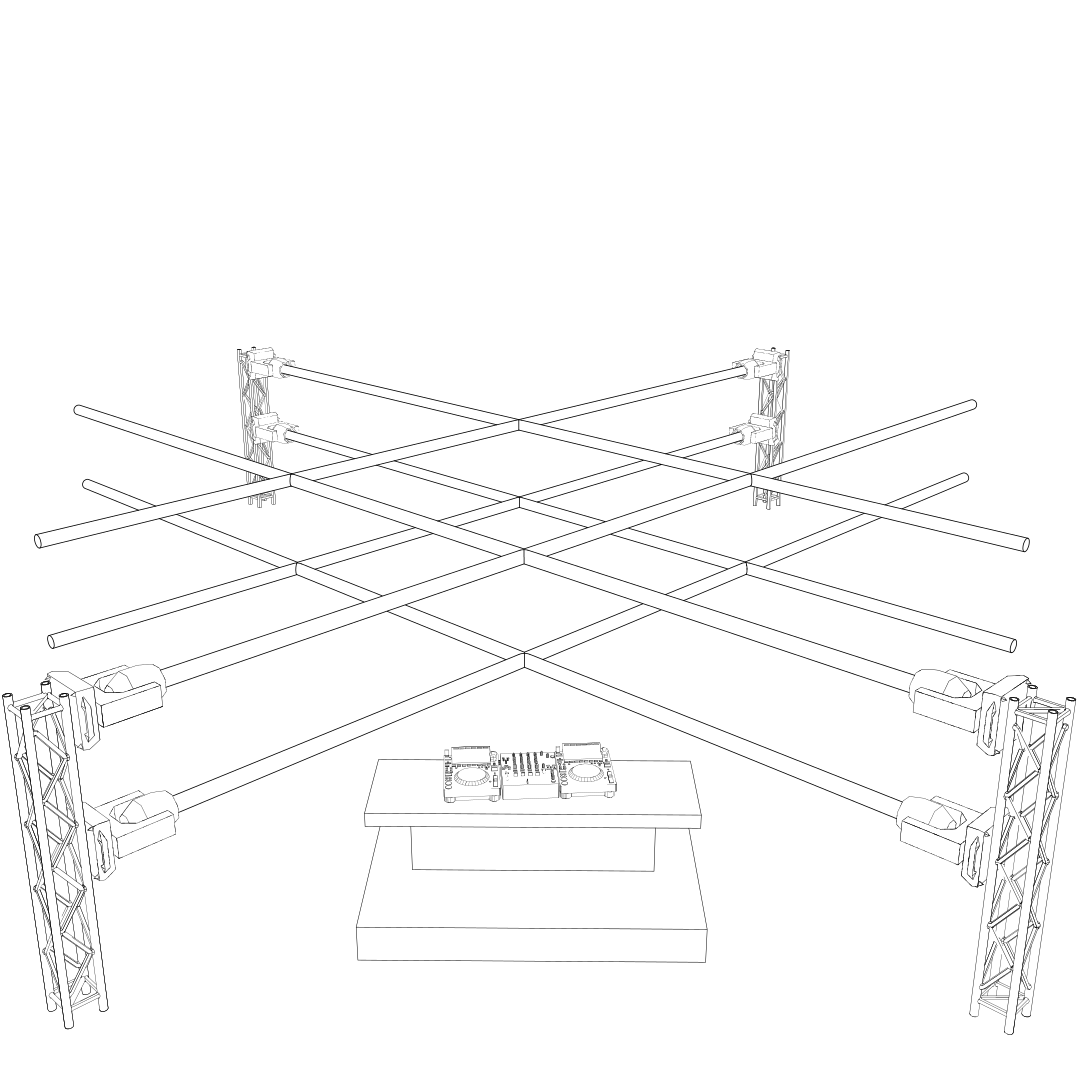
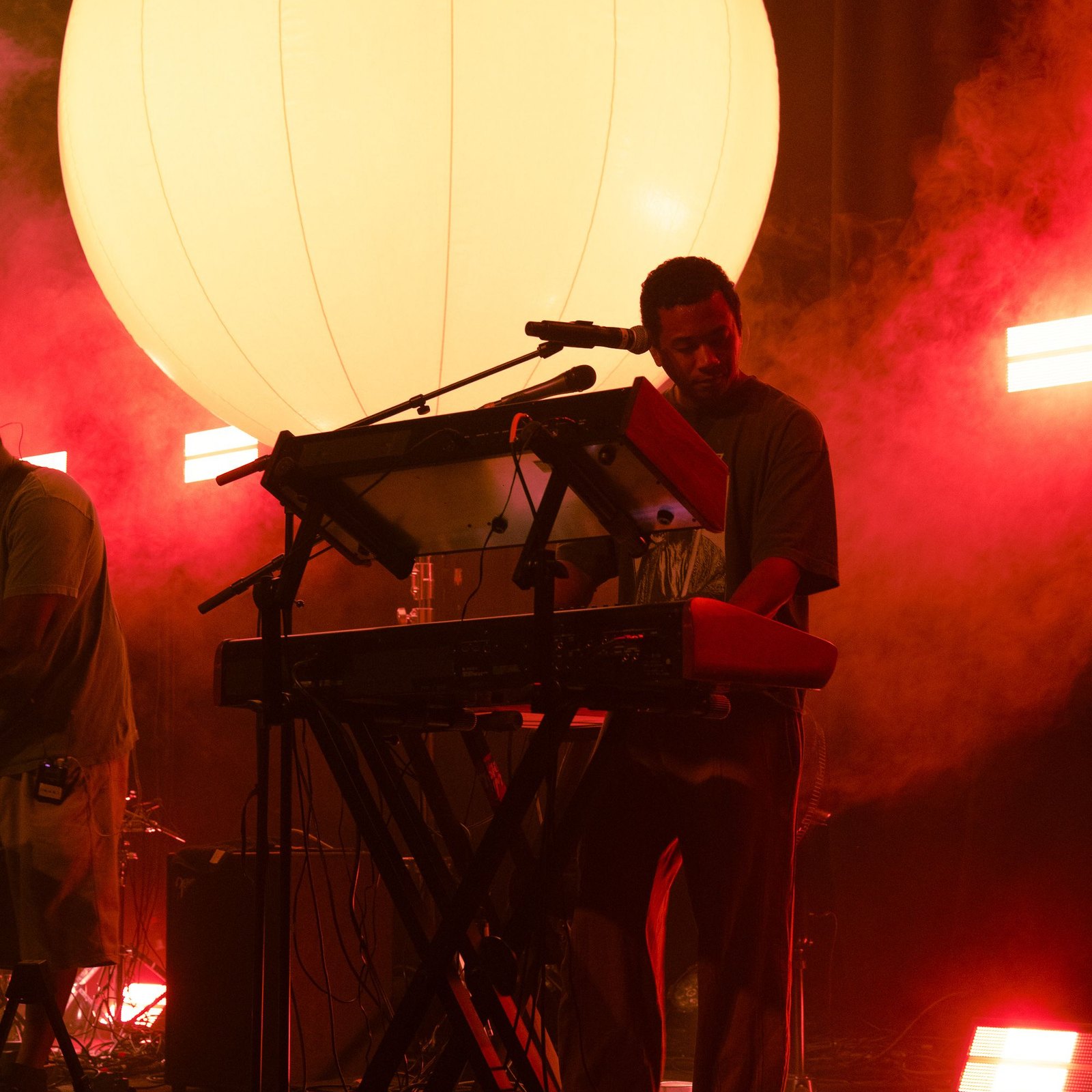
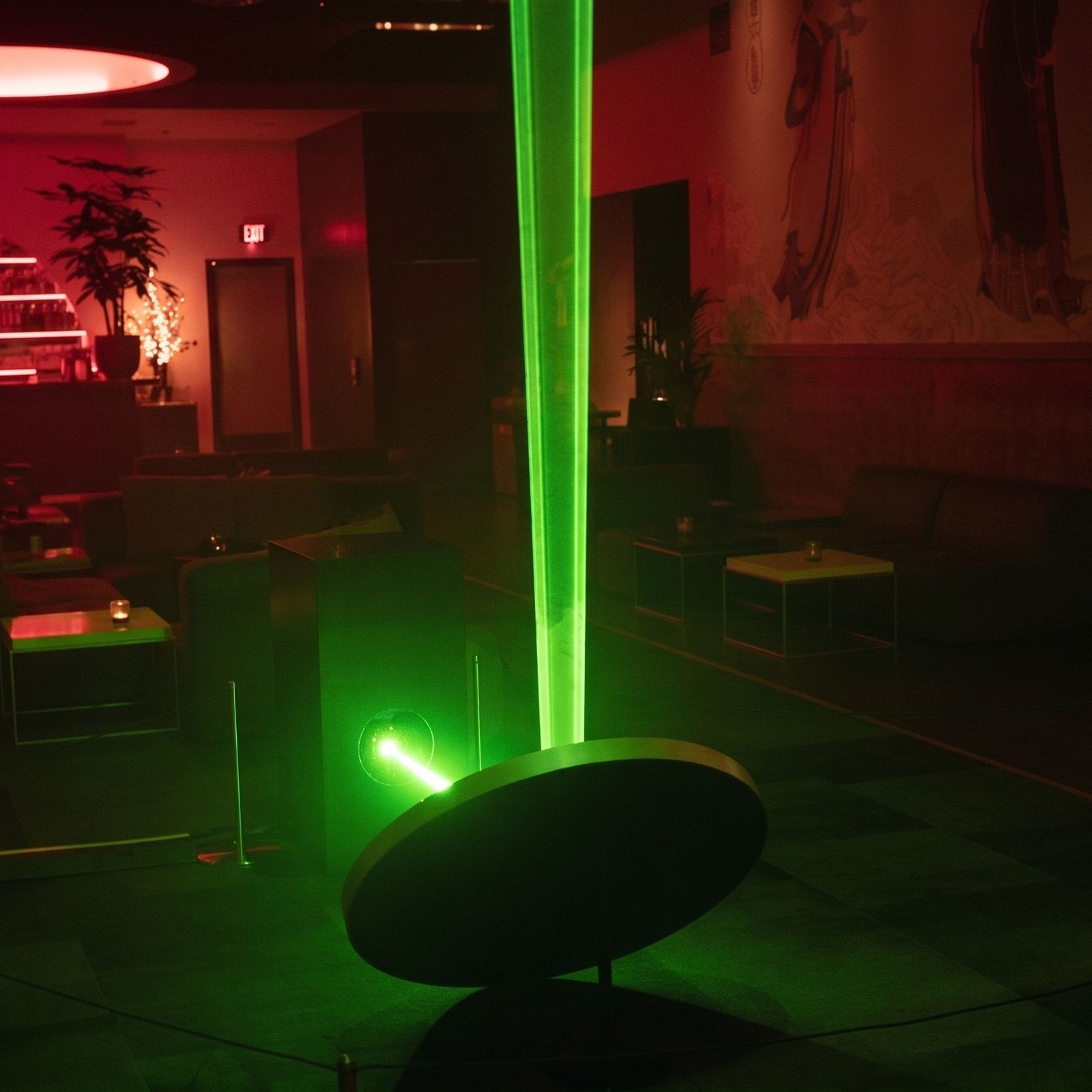
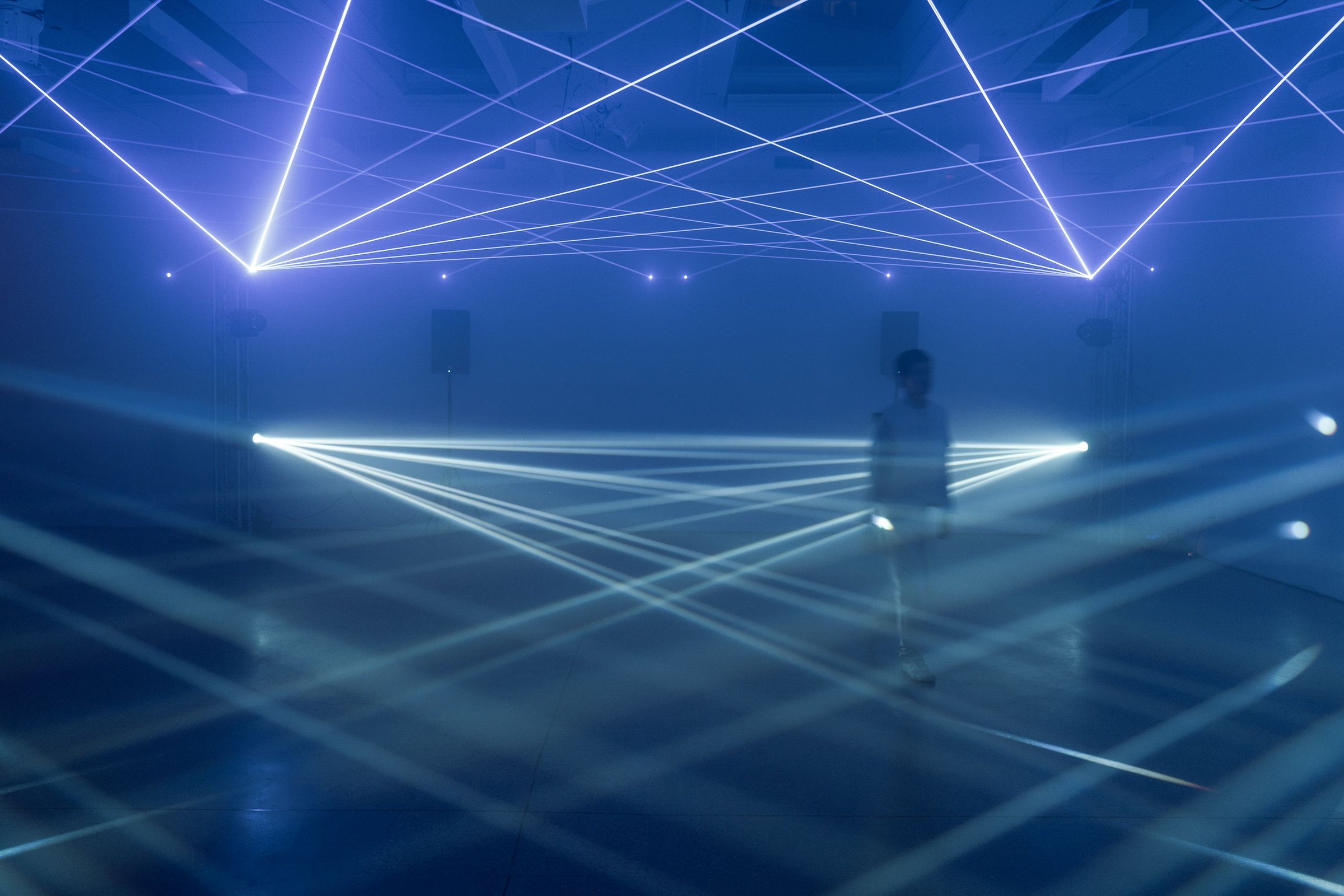
FOG After Party was an event after the opening of FOG Design+Art Fair 2026 in San Francisco, hosted by FourOneNine. New Nostalgia designed a custom lighting installation and provided sound production for the event. The setup, titled Lattice, featured a four-point sound system, eight moving head fixtures, and 4 laser projectors arranged to produce grid-like patterns of light projecting inward from the corners of the space. They also created a veil of light that acted as a gate before entering the party.
Full Lattice Installation View
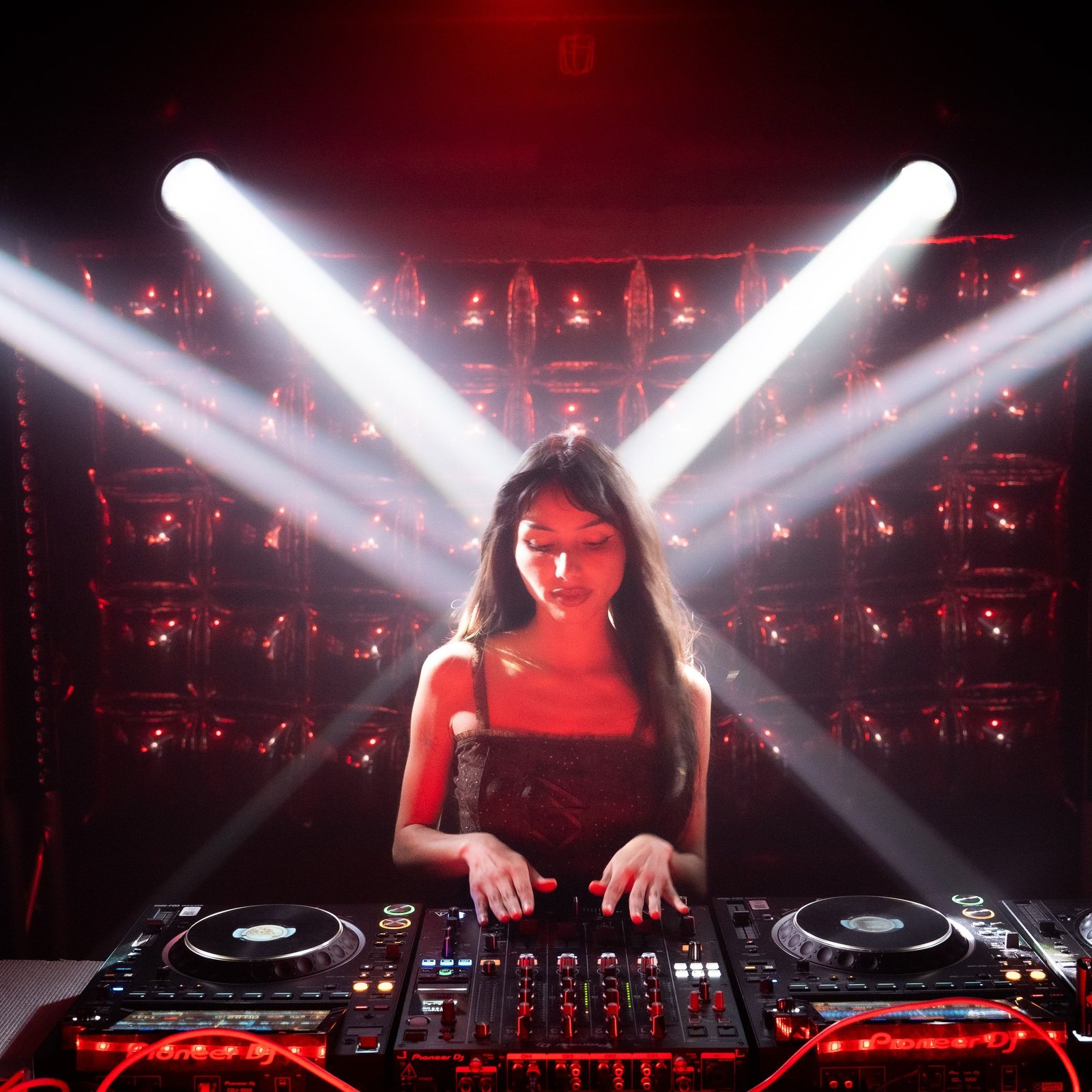
Heron Preston DJing to group of FOG After Party attendees
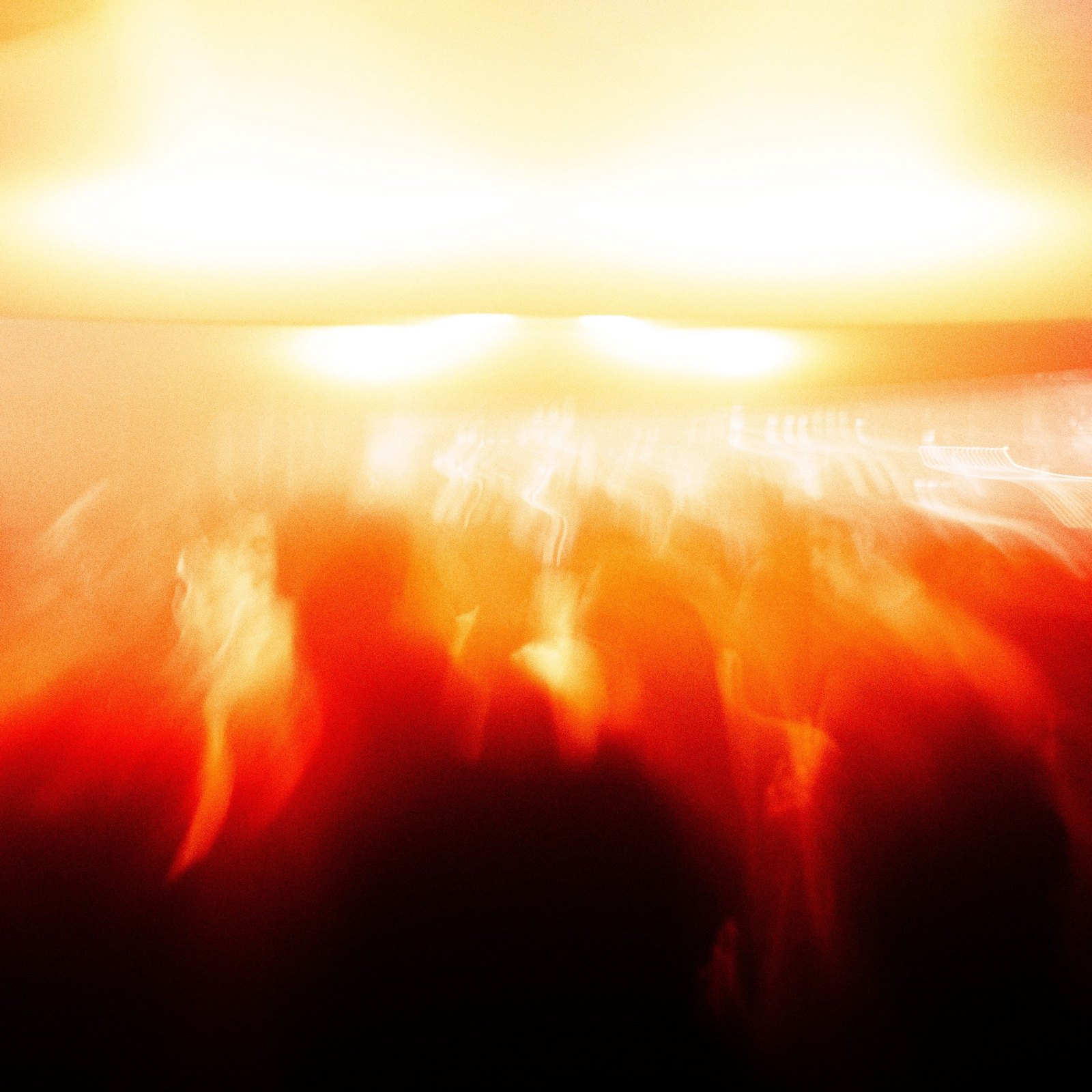
Radial starburst beam cutting through FOG After Party attendees
Photos Steve Lucero
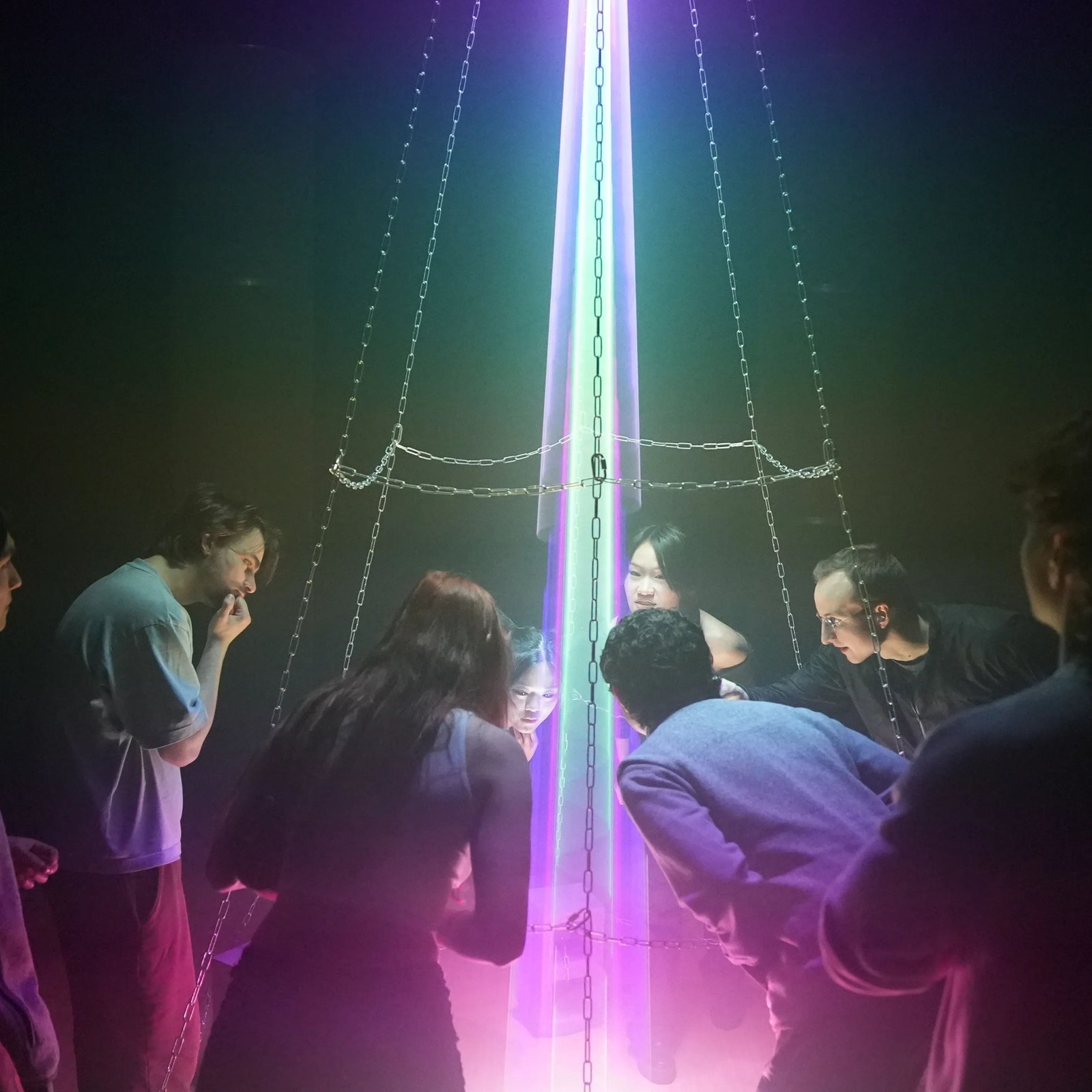
Attendee interaction with Lattice installation
Photos Steve Lucero
Introduction
Fragmentation is emerging as a defining trend of the 2020s. Whether through algorithms, preferences, or ideologies, we’re subjects of connective technology that doesn’t truly connect us.
Lattices are structured ways of organizing where people can make sense of how any two things relate. Nothing is isolated; everything connects in a predictable and orderly way.
It reminds us of a spiritual truth we’ve forgotten: we are fundamentally relational beings in a relational universe. Transcendence isn’t found by escaping the material world, but emerges in the intersections between things. Lattices redirect our misdirected desire for wholeness away from isolated consumption and toward its true source: the space between us.
1. Free-flowing, Symmetrical, De-Centered
A question has been circulating across countless TikToks and IG carousel essays: Why are so many parties organized around the DJ?
In response, we conceptualized FOG Afters by leaning into the intimacy of a cocktail party over the spectacle of a nightclub. Our priority was social connection, not the performance.
Our proposed idea was a uniform dance floor. Light and sound coming equally from all four corners, ensuring that no single point dominated the room. Anywhere in the party could be the right place to stand.
It has been a long fifty years since Studio 54 closed its doors, yet images of the nightclub still found its way into our pitch deck. Our generation yearns for that era of club culture: no phones, no visible DJ, a truly free-flowing and decentralized experience. The misdirected sense of longing reminds me of Freya India’s writing on anemoia—nostalgia for a time or place one has never known.1
In practice, our de-centered party stayed a forgotten dream. Heron Preston was DJing, how could one not be fixated on the performer? Mixing between 100 BPM Ibiza tech to genre blending oddballs back to soulful classic house, there was a powerful energy between the crowd and DJ that’s not to be interrupted.
The lattice design failed to rewire orientation and break our usual habits.
Despite that, something quieter persisted beneath the surface. The grid carried a subtext—an effect produced by repetition and symmetry. Attendees describing the space as “immersive” seemed less like a comment on spectacle and more like a feeling of a shared psychological sense of connection across the room.
2. 1:2:1
Sculptor Donald Judd articulated through his Untitled series, the informationally honest practice of simple ratios (1:2, 1:4, 1:4:1, etc.).
Judd writes, “Proportion is very important to us, both in our minds and lives and as objectified visually, since it is thought and feeling undivided, since it is unity and harmony, easy or difficult, and often peace and quiet.” Proportion, in this sense, is a condition of perception and how we experience reality itself. Simple ratios allow the whole to be understood immediately, without mediation.
His influential 1964 critique, Specific Objects, rejected the metaphors and symbolism behind paintings and sculptures in favor of actual, tangible space. The work should not stand for something—it should be something. To Judd, it isn’t necessary for a work to have a lot of things to look at, to compare, to analyze one by one, to contemplate. “The thing as a whole, its quality as a whole, is what is interesting.”2
Our lattice design drew directly from Judd, using simple ratios across materials and components: four trusses, four lasers, and eight moving heads. Rather than having the attention around a focal object (a video wall, projector, backlit DJ), the structure emphasized relationships between elements.
The audience, which was pretty diverse in age and cultural background, in turn experienced the space less as a collection of their individual scenes (SF high art, Folsom st. club kids, FiDi tech vests, etc.) but more as a unified, connected whole.
3. Green Leaves Twinkle
We’ve noticed that any sense of unity among strangers feels increasingly rare.
Not because individuality is more valued now—that has always been part of contemporary Western culture—but because our technological infrastructure actively fragments shared experience. Algorithms personalize nearly everything, ensuring that no two people encounter the same information. We are hyperconnected yet isolated, each consuming a curated reality that makes genuine collective experience harder to access.
Cultural theorist Erik Davis reveals the source of our problem noting that “the desire that enlivens the commodities of the urban milieu is, at its essence, a desire for transcendence.”
Beat poet Kenneth Rexroth suggests an answer through what might be called everyday transcendence. Writing of the Sierras, he describes moments when “new green leaves twinkle in the rising air,” glimpses of what he calls the “holiness of the real.” These are not grand revelations or cosmic interventions, but quiet openings—instances that reconnect us to the simplicity of ordinary material life.3
Taken all together, these writings point to a deeper condition of contemporary life: We want a deeper sense of meaning and belonging and we chase it through consumption. We attempt to approach the infinite through finite objects. Given this, how might transcendence be encountered at all? And more pointedly, how could a Wednesday-night art afterparty in San Francisco offer anything resembling spiritual awareness?
The lattice offers such a moment. It produces a form of everyday transcendence by making relationships visible. Transcendence does not reside in the beams themselves, nor somewhere beyond them; it emerges in the connections between elements, in light passing through space and in the intervals that both separate and unite. The grid shows the reality of interdependence itself.
4. Conclusion
The name Lattice came from Alex Grey’s 1981 painting Universal Mind Lattice (1981), which depicts the geometric pattern of interconnection Grey describes as fundamental to consciousness itself. The painting includes a quote from the Chandogya Upanishad: “There is a Light that shines beyond all things on earth, beyond us all, beyond the heavens, beyond the highest, the very highest heavens. This is the Light that shines in our heart.”4
Grey’s concept is quite esoteric: we emanate energy fields from our bodies, and where these fields overlap, they create a lattice structure. This lattice expands outward—first connecting you to those immediately around you, then extending further until it becomes what Grey calls “a universal field of energy, which is consciousness.”
Our stage design didn’t disrupt conventional crowd dynamics or shift attention away from the DJ booth. Instead, it worked with the existing structure to amplify something subtler: the experience of collective presence. What emerged wasn’t a radical reimagining of the rave format but something perhaps more valuable, a tangible sense of unified consciousness, where individual experience and collective field became indistinguishable, if only for a few hours at FourOneNine.
Technical Overview
Lattice was configured as a four-corner lighting, laser, and audio environment. Freestanding truss towers in each corner supported moving head fixtures and laser projectors, angled inward to create intersecting beam geometry throughout the performance space, while a four-point sound system reinforced the spatial layout.
1. Truss & Fixture Layout
Four 10-foot freestanding truss towers were positioned in the corners of the room. Each tower supported three fixtures mounted at fixed heights
Elation Dartz 360 at 3.5 ftElation Dartz 360 at 7 ftKvant Clubmax 6500 laser at 10 ft
All fixtures were aimed exactly 45 degrees inward, converging toward the center of the space to create layered beam intersections at multiple heights.
Two Rockville Stage Panel 864 LED fixtures were floor-mounted directly behind the DJ booth, providing rear backlight and silhouette effects.
2. Lighting Control
All eight moving heads were connected via a single DMX line and daisy-chained back to the front-of-house. Control was handled by an ADJ Wolfmix WMX1 lighting controller, with each fixture assigned its own group to allow individual control of position, color, and beam effects.
The two stage panels were operated on a separate DMX line and controlled independently using a second controller, allowing the backlight layer to be programmed and triggered separately from the moving head system.
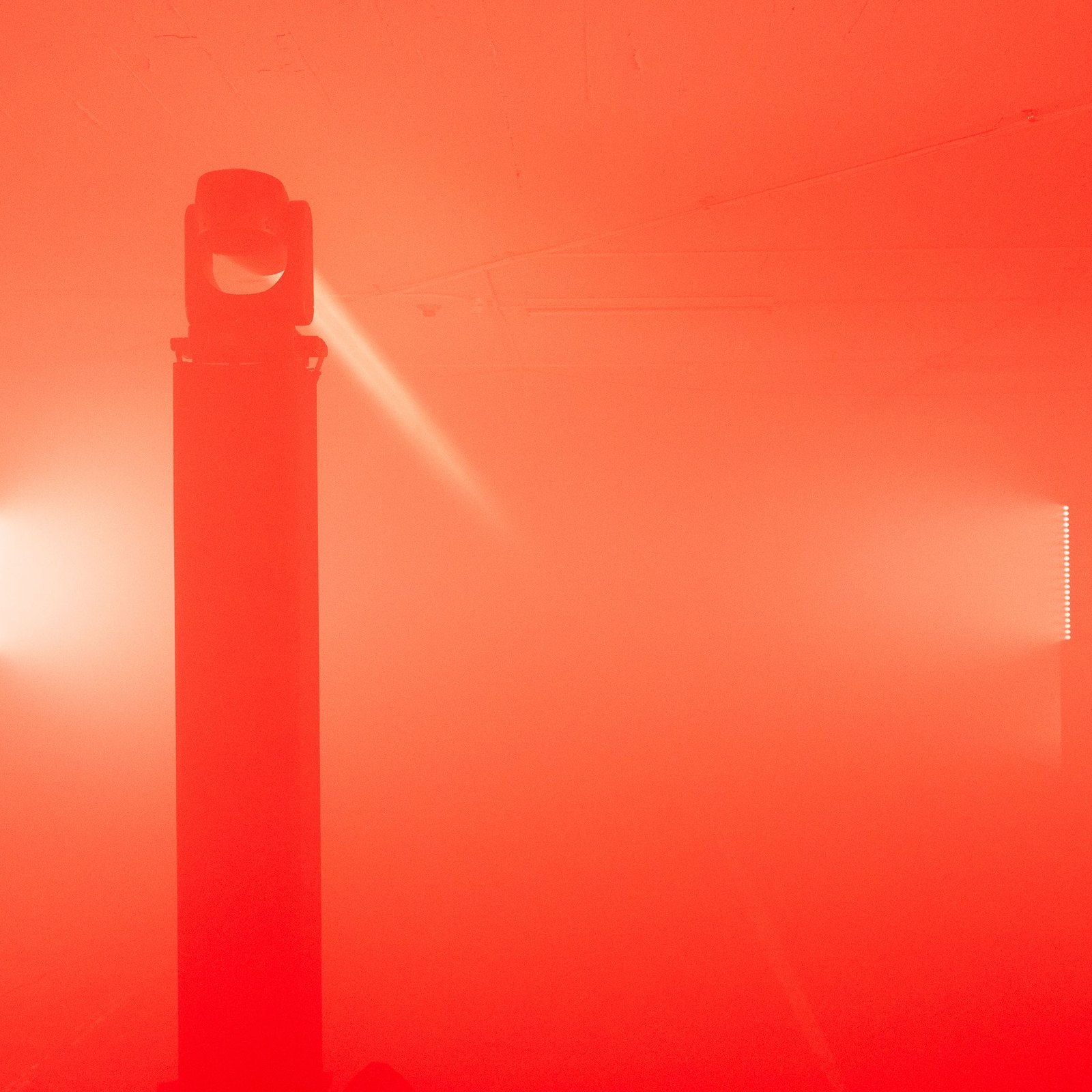
Atmospheric density was generated using two Chauvet Hurricane 1800 fog machines. Fog was used to fill the space evenly and reveal volumetric beam paths from both the moving luminaires and laser projectors.
3. Laser System
Each truss tower incorporated a laser projector. All lasers were networked via Ethernet and routed to the front of house, where a dedicated control laptop running Pangolin Beyond generated and distributed laser content.
For safety and interlock, the lasers were also daisy-chained via DMX for emergency-stop functionality, providing a hardware-level safety override independent of network control.
4. Audio & DJ Playback
The DJ booth was outfitted with three Pioneer CDJs and a Pioneer DJM-A9 mixer.
Audio was deployed in a four-corner speaker configuration, with loudspeakers positioned adjacent to each truss tower. The front of the room was equipped with Danley SM60 loudspeakers paired with Danley TH118XL subwoofers, powered by a Danley DNA 20K4 amplifier, while QSC K12.2 loudspeakers were deployed at the rear of the room.
The DJ mixer output was routed into a Behringer X Air digital mixer, then into the Danley amplifier and speaker system. System control and tuning were handled wirelessly via iPad.
5. Gear Summary
Lighting & Rigging8× Elation Dartz 3604× 10 ft freestanding truss towers2× Rockville Stage Panel 8642× ADJ Wolfmix WMX1
Lasers4× Kvant Clubmax 6500 FB4Pangolin Beyond (control laptop)Ethernet laser networkDMX emergency-stop chain
Atmospherics2× Chauvet Hurricane 1800 fog machines
DJ Gear3× Pioneer CDJs1× Pioneer DJM-A91× network link box
Audio System2× Danley SM602× Danley TH118XL subwoofersDanley DNA 20K4 amplifier2× QSC K12.2Behringer X Air digital mixerWiFi routeriPad control device
New Nostalgia members with installation view, San Francisco, CA, 2026
Citations
- 1 India, Freya. “A Time We Never Knew: “Phones? No. We Had Each Other.”” After Babel, 22 Apr. 2024, www.afterbabel.com/p/a-time-we-never-knew.
- 2 Judd, Donald. Specific Objects. 1964, Judd Foundation, juddfoundation.org/wp-content/uploads/2016/04/Specific_Objects_1964.pdf.
- 3 Davis, Erik. Nomad Codes: Adventures in Modern Esoterica. Yeti Publishing, 2010.
- 4 Grey, Alex. Universal Mind Lattice. 1981, acrylic on canvas, 46 × 84 in. Sacred Mirrors, Alex Grey
Published by
- Group:
- New Nostalgia
- Editors:
- Aakash Malhotra, Brendan Luu
- Writers:
- Aakash Malhotra, Jordan Ponciano
- Graphic Design:
- Brendan Luu
- Printing:
- New Nostalgia, or you
Production by
- Technical Direction:
- Jordan Ponciano
- Creative Direction:
- Brendan Luu
- Executive Producer:
- Aakash Malhotra
© 2026 by New Nostalgia
Created in San Francisco, CA, USA
All rights reserved
First edition, February 2026