GodBeam: A case study by New Nostalgia
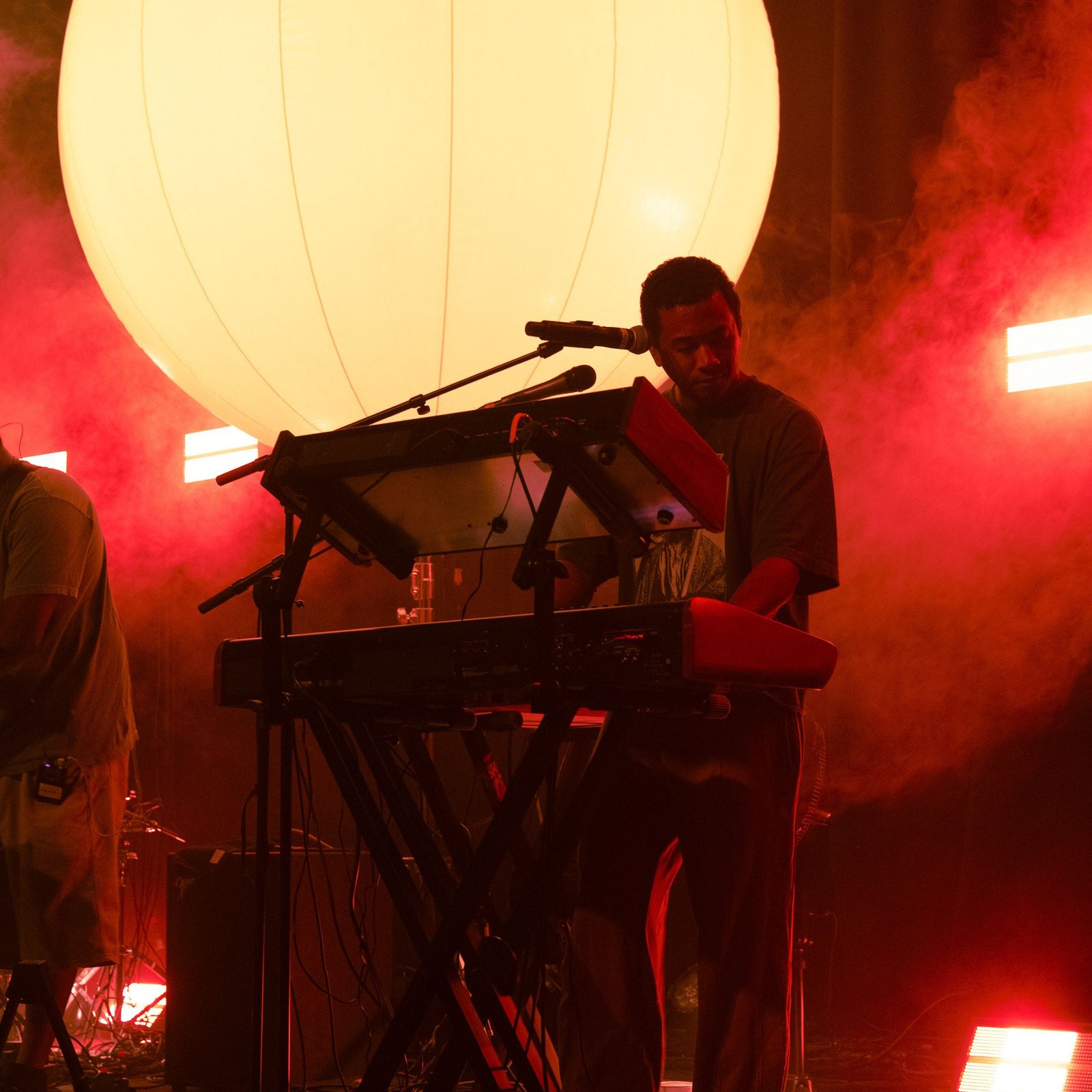
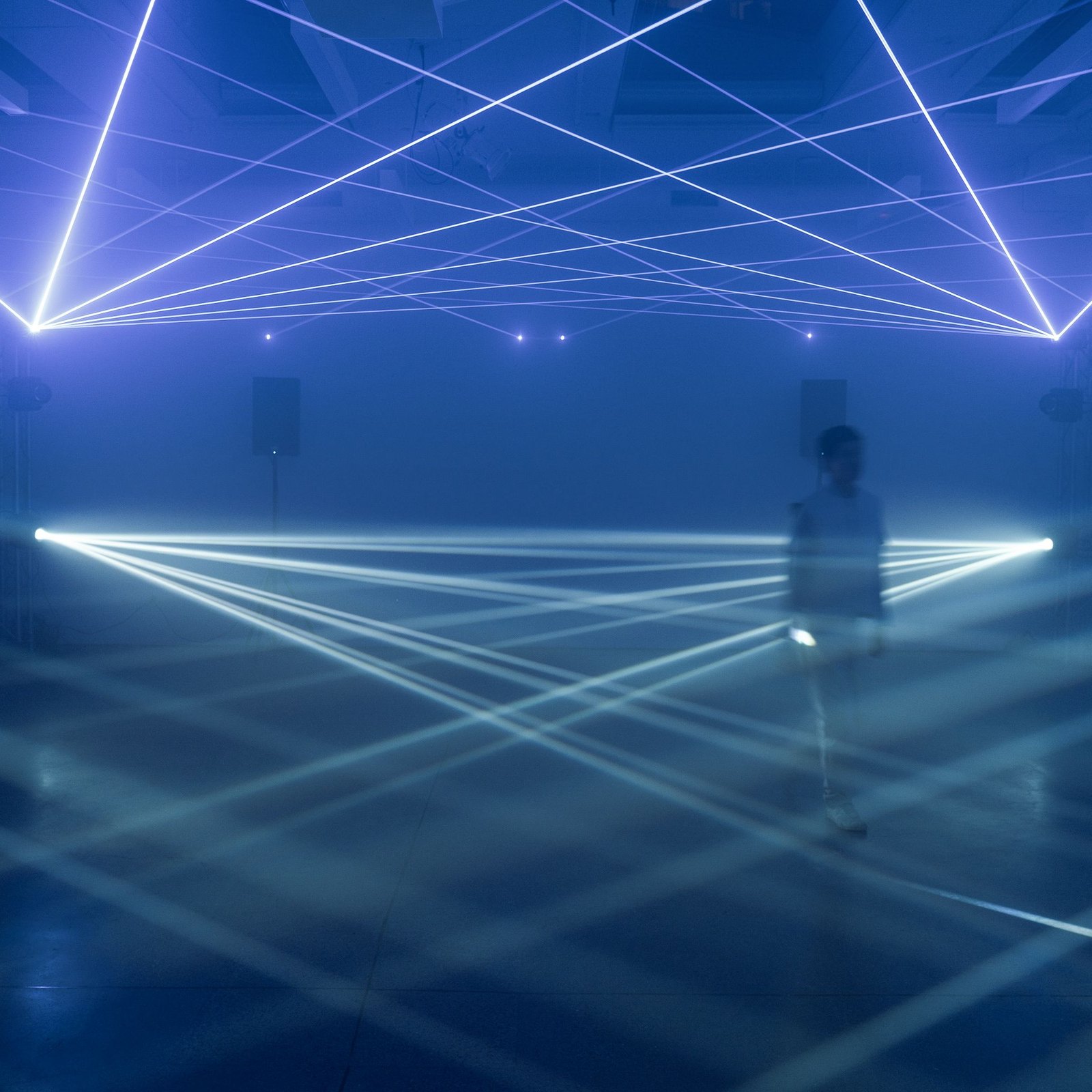
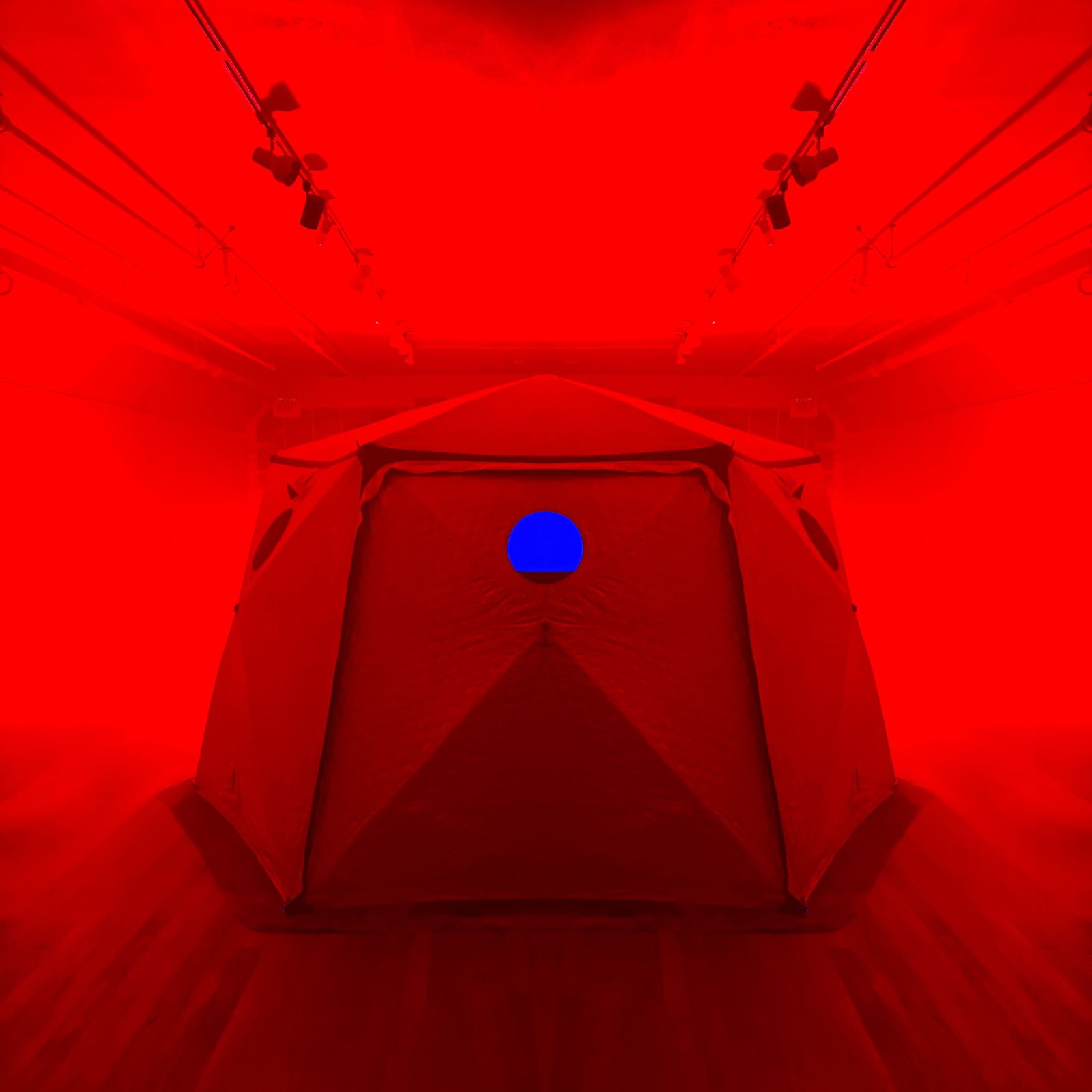
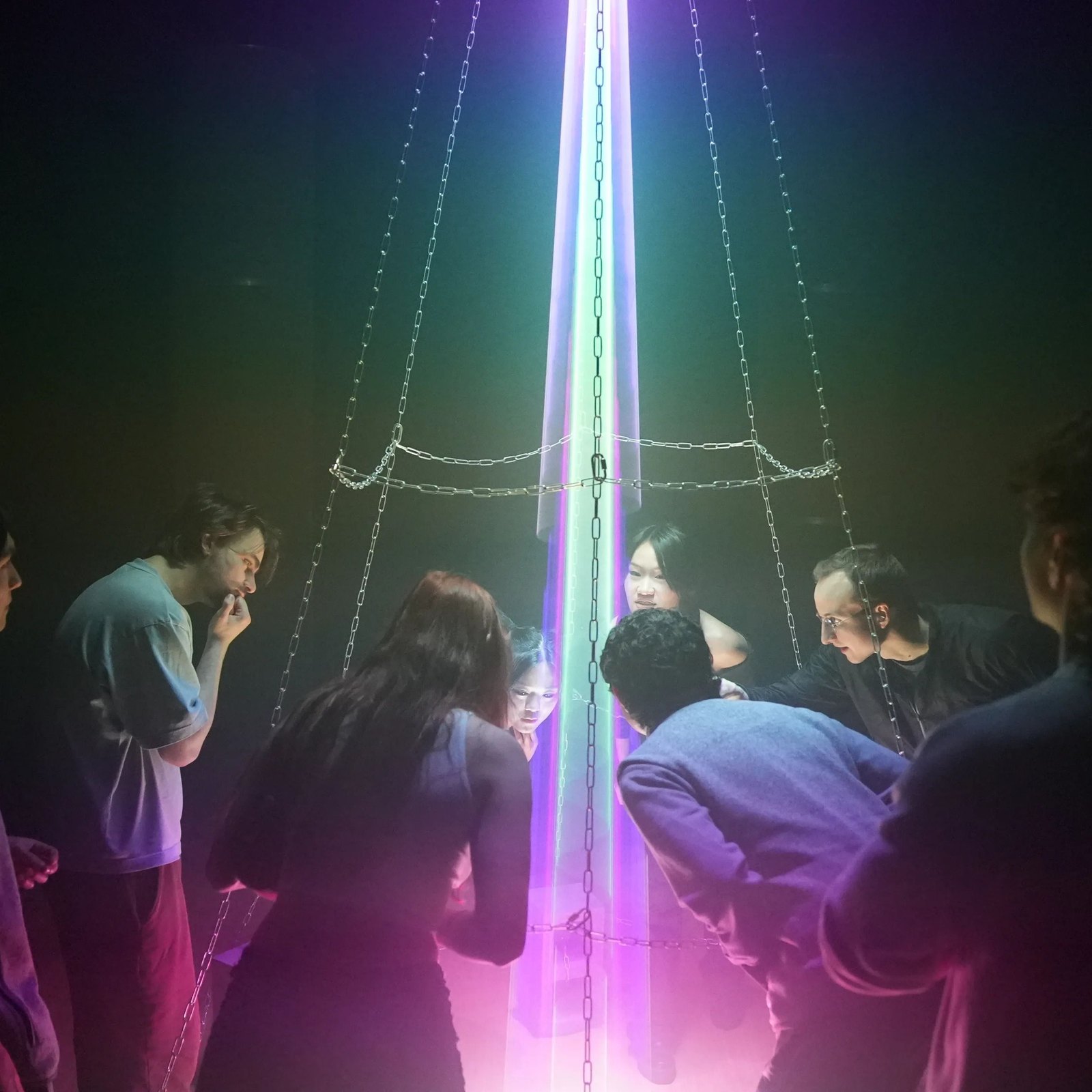
FORM Arcosanti (2026) was an intimate, 2,500-person micro–music festival held at Arcosanti, the experimental architectural eco-city in the Arizona desert. Housed beneath the historic Arcosanti cafe, Envelop was an immersive listening stage with a spatial sound system. New Nostalgia designed, programmed, and built a site-specific lighting installation for Envelop called GodBeam. It was built around a suspended square of mylar with seven fixtures aimed at it, casting reflective caustics across the rocky floor. With fog, the reflective rays produced crepuscular rays, also known as god rays.
GodBeam installation view, Mayer, AZ, 2026
Mylar creating volumetric rays, blue light reflections
Photo Alingoh Loh
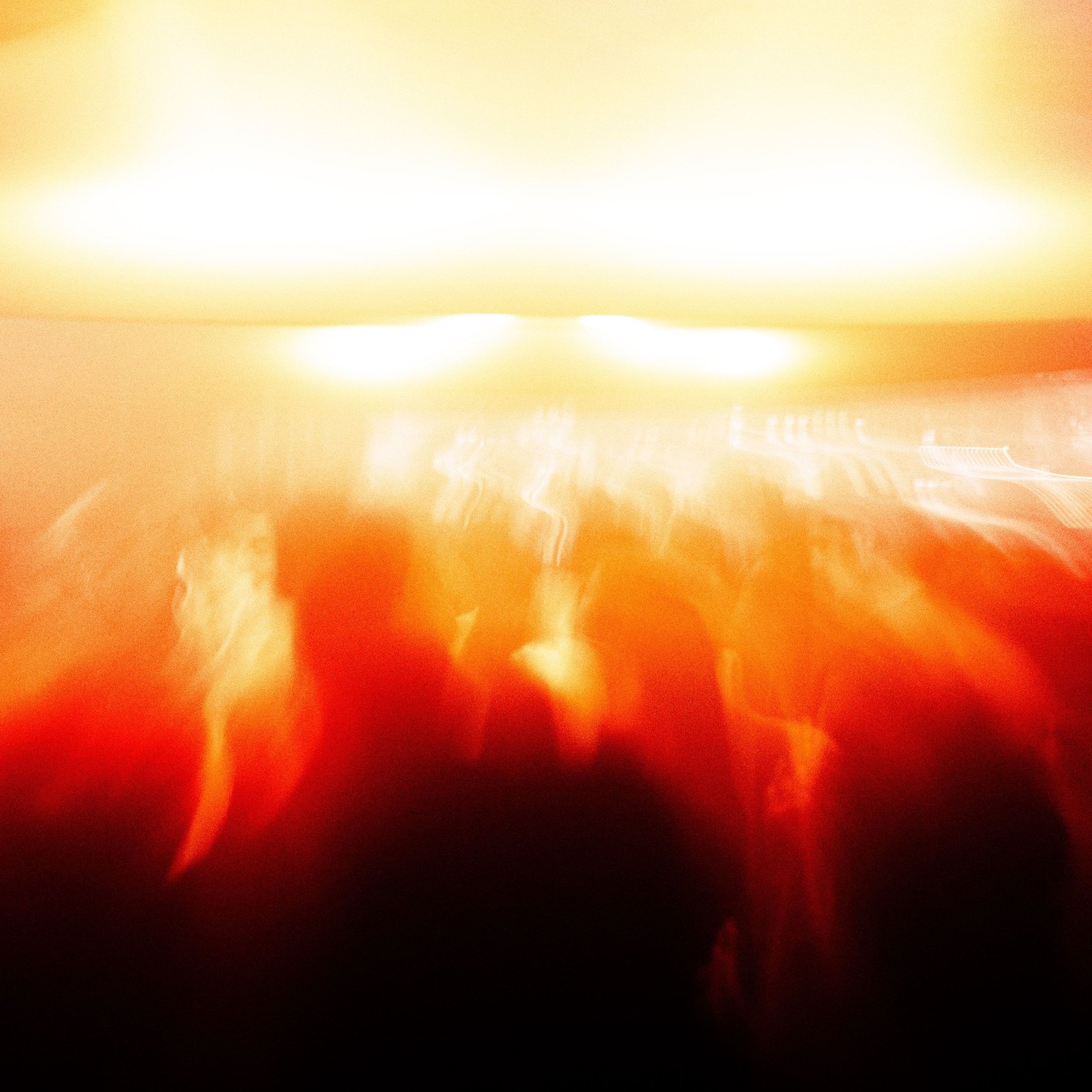
Caustic reflections on cave floor
Photo Alingoh Loh
Crowdview from GodBeam installation
Photo Alingoh Loh
Photo Alingoh Loh
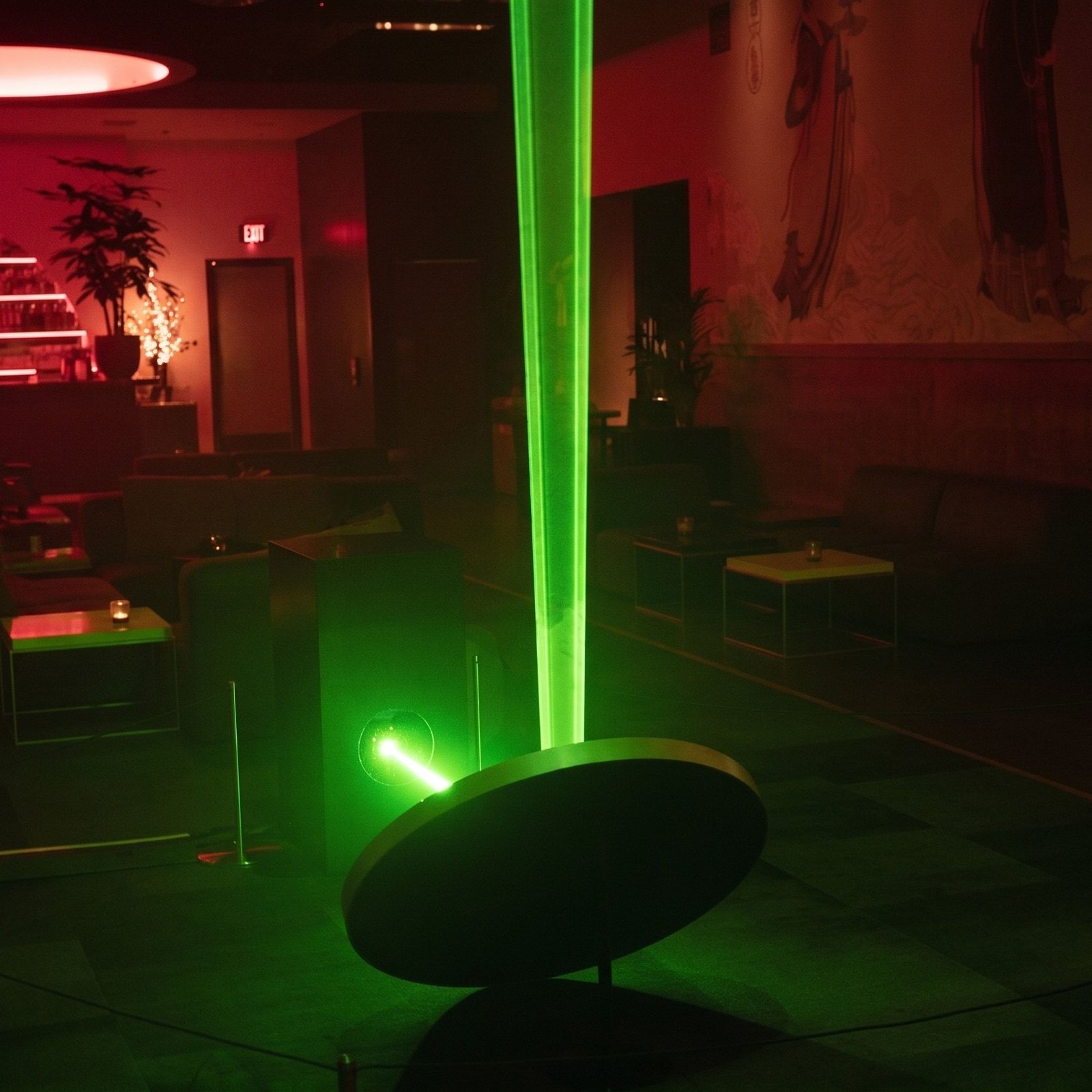
Circle column laser shooting into Arizona Canyon
Photo Alingoh Loh
1. City of the Future
Sitting in the amphitheater on a sunny Arizona Saturday, watching ML Buch pluck across spacious, everlasting chords, you can easily glimpse Paolo Soleri’s utopian vision for the eco-city of Arcosanti.
A disciple of Frank Lloyd Wright, the late Italian-born architect championed compact, stacked urban spaces over sprawl and excess. Soleri coined the term “arcology,” a blend of architecture and ecology, for an ethos centered on ecological harmony through renewability and resourcefulness: using the sun to heat us and natural shade instead of air conditioning.3 Soleri’s style is futuristic yet primitive. Pueblo meets megalith in the desert—the massive raw-concrete structures would fit easily on Tatooine or Arrakis.
Arcosanti, his magnum opus, was built mostly in the 1970s. Its realized pieces—a greenhouse, a cafe, an amphitheater, eco-living apartments—survive today as a tourist destination, the city only 5% complete. A mostly unrealized utopian vision.
The utopia was soiled further in 2017, when Soleri’s own daughter accused him of sexual abuse.2 For years, Soleri and his inner circle had orchestrated cover-ups, intimidation, and control, propping up the visionary leader. Utopia, the word Sir Thomas More coined from Greek, literally means “no place.” Soleri, like most who try to build Valhalla, flew too close to the sun.
2. FORM
Dubbed the “anti-Fyre” festival, FORM’s yearly micro-festival of 2,000 people infuses Arcosanti with new life.1 With no overlapping sets and dangerously good programming, FORM transforms the city into a weekend-long mecca of contemporary arts and culture. It may be the most realistic outcome of Soleri’s vision: a late-stage-capitalist utopia with glamping, green rooms, free alcohol, and no shortage of giant Spotify-sponsored “chill zones.”
As you pass through the tunnel from the arch to the amphitheater, the stacked urban futurism feels cohesive. The music is a highlight. Seeing Fcukers right before Blood Orange, followed by Avalon Emerson, then Lorde: the programming is diverse, and the intimacy gives FORM serious general appeal.
Not quite hippie, not quite mainstream, FORM’s crowd hovers in a strange aesthetic no-man’s-land, and you’re as likely to meet one end of the spectrum as the other. It’s got a bit of burner, a bit of Arizona Greek life, a bit of the LA music scene, all smish-smashed together against a gorgeous desert landscape and otherworldly architecture.
Despite its setbacks, chief among them the unforeseen hurricane that canceled the 2026 festival’s final day, FORM is a special microcosm that shines brightly on the complicated city of Arcosanti.
3. The Cave
Among FORM’s surprises, the Envelop stage was one of its best-kept secrets. Tucked beneath the historic cafe, the shady rockbed made a perfect cavernous refuge. Home to bats and bugs, the cave looked out over the canyon, creating a contrasting zone of shade and light: an outdoor space where you felt indoors.
With its spatial, 360-degree sound system, Envelop was home to sound baths and Sakamoto and Eno listening sessions. Guests took comfort in the pillows and blankets spread across the rocky floor, sleeping and decompressing. We wanted our lighting to complement that mood: meditative and slowly evolving, something you could look at for a long time without getting overwhelmed.
4. God Rays
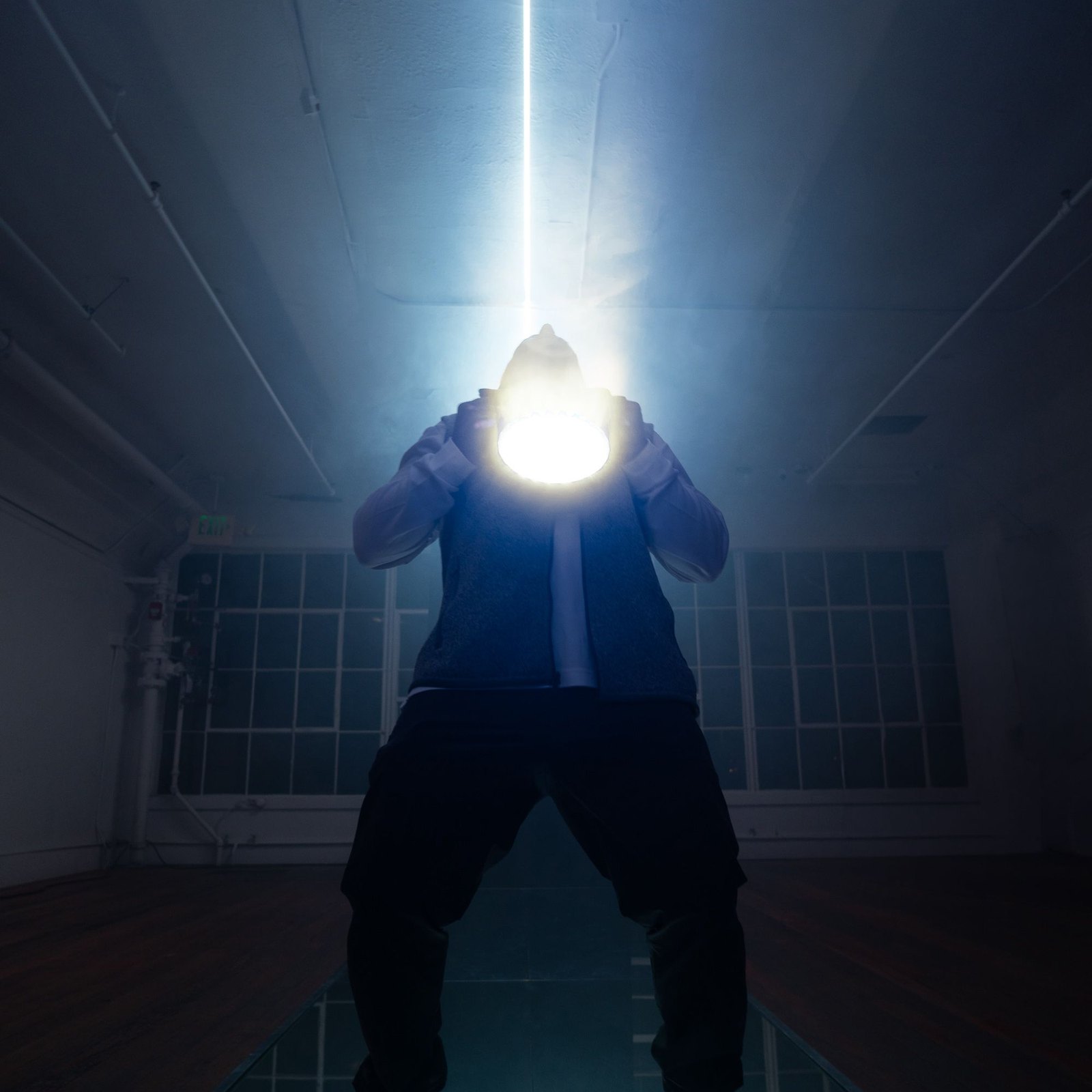
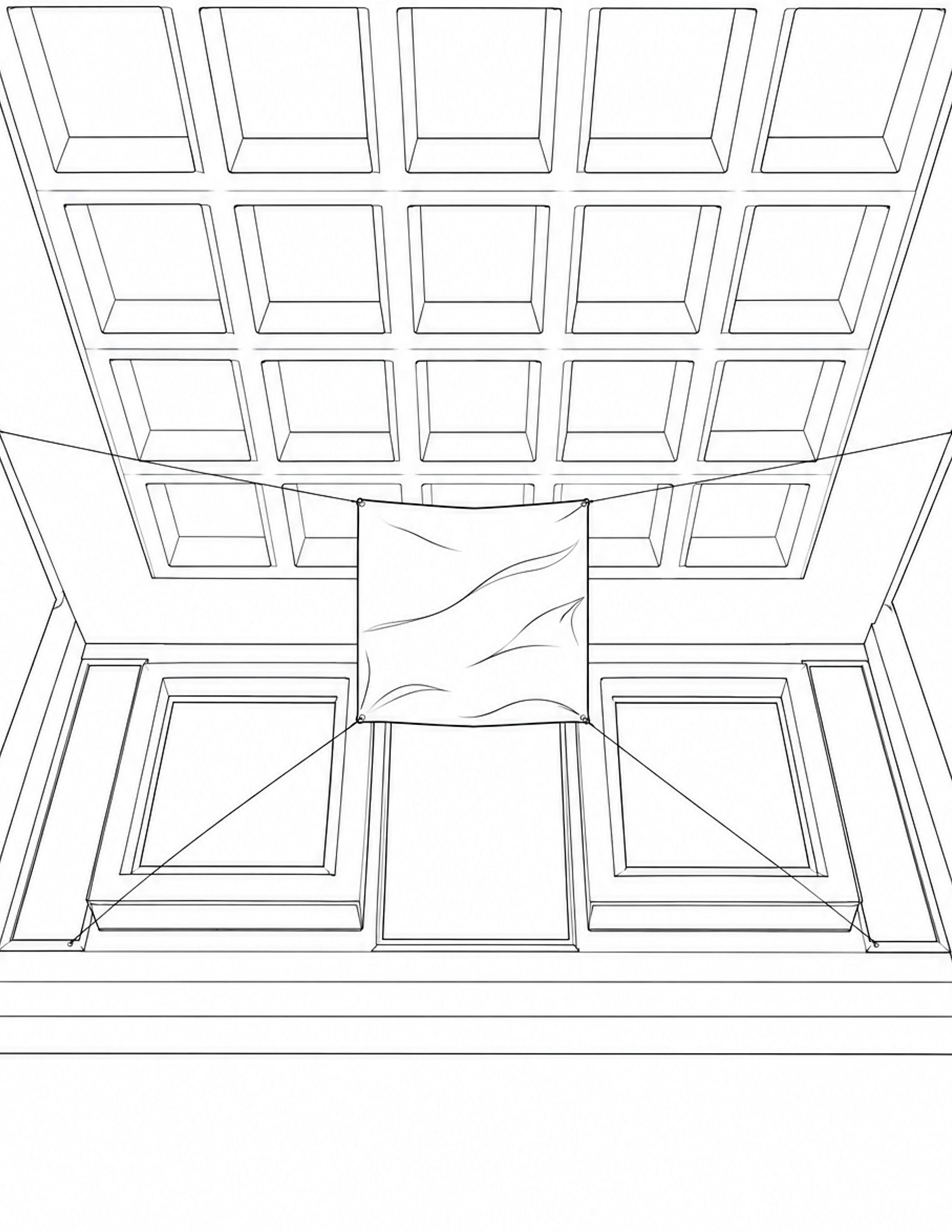
At the center of the cave is a large, square, atrium-style opening with square windows and a higher ceiling than the rest of the structure. To match the square motif, we designed a square Mylar tarp suspended at its four corners. By hanging it in the center of the atrium, we were able to make light rays appear to spill from the top onto the floor of the cave.
The reflections on the floor created water-like caustics layered over the rock’s already complex geometry. In the gentle canyon wind, the Mylar shimmered, giving the rays endless variations to reflect off.
On the penultimate night, we shot a laser across the canyon to the opposite hilltop. The effect was mesmerizing: a volumetric column spanning the depth of the canyon. We planned the laser around the forecast. A storm created a milky way effect which created beautiful speckled crystals illuminating raindrops out through the valley.
Together, these lighting interactions created a comforting yet exploratory environment. You could move from spot to spot and find a new place to curl up, catching a new angle on the shimmering rays.
5. Some Place
Soleri spent fifty years trying to pour utopia into concrete, and what he left behind is 5% of a city and a legacy that collapsed under the weight of one man’s control. The utopia he imagined remained a blueprint.
But for one weekend, something closer to it showed up anyway. It didn’t come from a master plan. It came because a few thousand people decided to show up and make something together. Artists, producers, riggers, sound engineers, festival staff, and strangers lying on blankets in a cave all built it at once. It didn’t need a visionary at the top. It needed people willing to haul gear into the desert, run cable through bat-filled rock, and stay up late aiming lights.
That’s what we tried to build with GodBeam. We hung the Mylar, aimed the fixtures, and then let go. The canyon wind decided how the light moved. The crowd decided where to lie down and what angle to watch from. No two people saw the same piece.
Maybe that’s the real translation of utopia. It isn’t a place you finish building. It’s a place that exists only while people are building it together, and it’s gone by Monday, washed out by a hurricane, waiting to be built again.
Technical Overview
This section outlines the technical layout and lighting control system used to construct the GodBeam installation at Envelop, FORM Arcosanti 2026. The installation centered on a suspended square of Mylar in the cave’s central atrium, with lighting aimed onto the Mylar to reflect beams and caustics down across the rocky floor.
1. Mylar & Rigging
The reflector was built from Mylar cut to approximately 5’ × 5’. It was positioned at the center of the atrium, directly beneath the square opening in the ceiling.
The Mylar was held from four points, one at each corner. A grommet was attached on each corner and connected by paracord and carabiners.
With tension only at the corners, the Mylar hung loosely rather than flat. The canyon wind kept the surface moving, so the reflections on the floor shifted continuously without any motorized movement.
2. Lighting
Four ADJ Saber Spots and three COLORado 1 Solos were positioned around the atrium perimeter and aimed up into the Mylar. Each fixture struck a different section of the sheet from a different angle, spreading the reflections across the floor rather than concentrating them in one area.
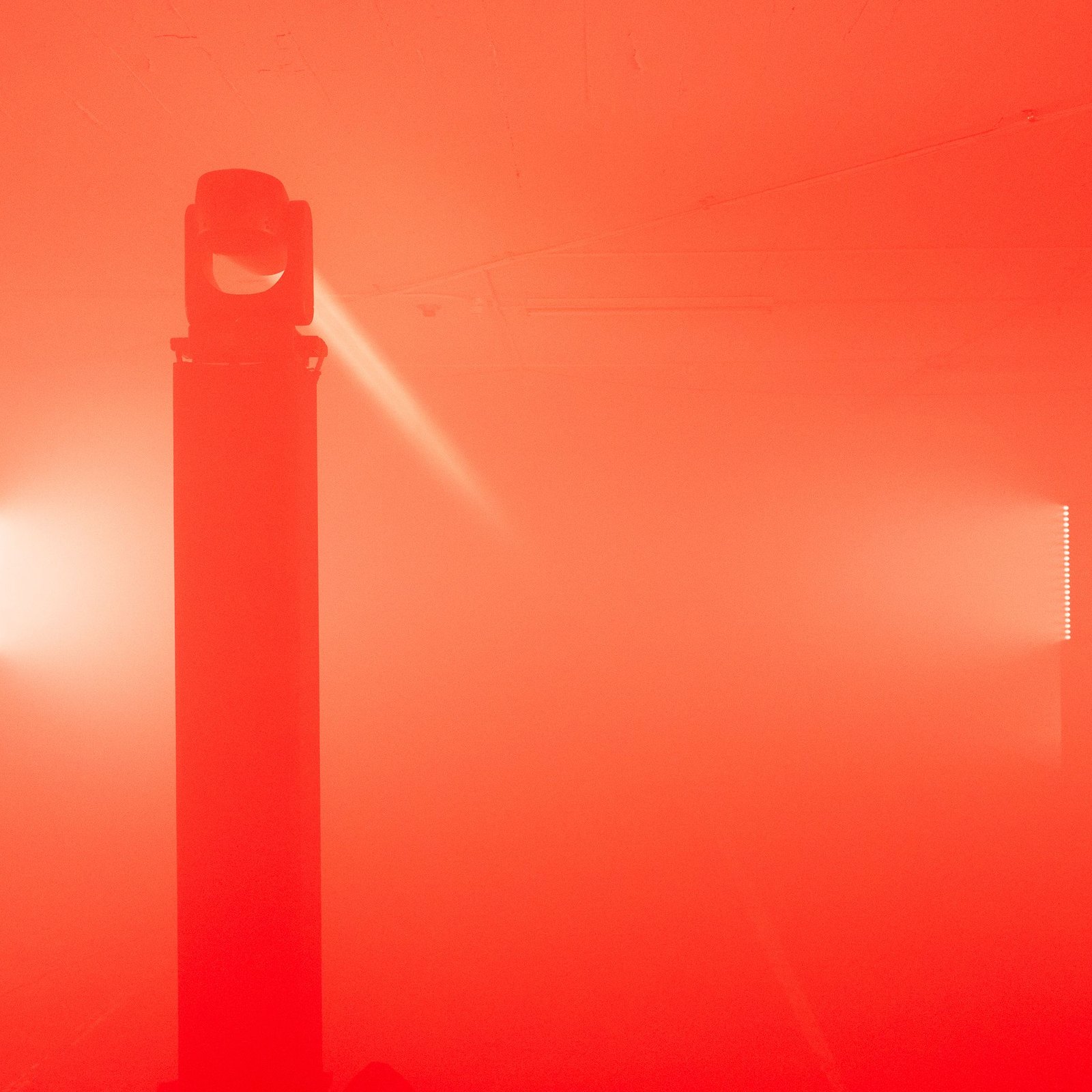
The reflected light landed on the cave floor as water-like caustics, layered over the uneven geometry of the rock. With haze in the air, the beams between the Mylar and the floor read as crepuscular rays, appearing to spill down from the opening above.
On the penultimate night, a Kvant 20W laser was added, aimed across the canyon and terminating on the opposite hilltop.
3. Lighting Control
All fixtures were controlled through a Wolfmix controller, laser was controlled by Pangolin.
Programming followed the pace of Envelop’s sound baths and listening sessions. Cues used slow crossfades in intensity and color phasers over several minutes with no strobing or fast chases.
4. Atmospherics
Atmospheric density was generated using one hazer placed behind a rock. The open canyon side of the cave let the haze drift and thin, so the density of the rays rose and fell throughout the night.
5. Gear Summary
Fabrication1× Mylar Tarp4× Carabiners4× Paracord2× Ratchet Strap
Lighting4× ADJ Spot Saber3× COLORado Solo1× Kvant 20W Laser
Atmospherics1× Hazer
Control / SoftwarePangolin BeyondADJ Wolfmix WMX 1
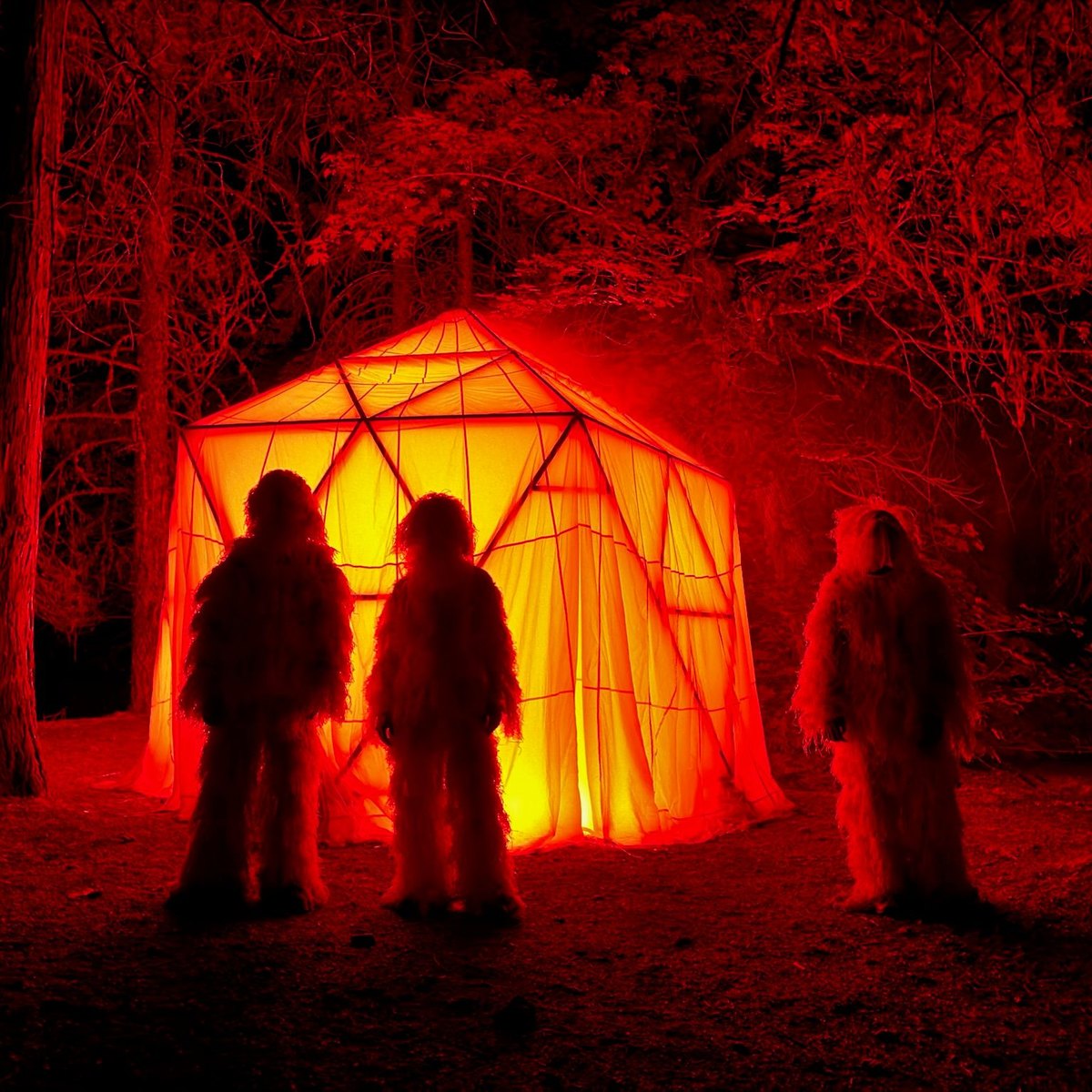
GodBeam installation view, red light, Mayer, AZ, 2026
Citations
- 1 Locker, Melissa. “The Anti-Fyre Festival.” Fast Company, 31 May 2017, www.fastcompany.com/40421588/form-arcosanti-the-anti-fyre-festival.
- 2 Soleri, Daniela. “Sexual Abuse: It’s You, Him, and His Work.” Medium, 13 Nov. 2017, medium.com/@soleri/sexual-abuse-its-you-him-and-his-work-88ecb8e99648. Accessed 4 Nov. 2026
- 3 Soleri, Paolo. Arcosanti: An Urban Laboratory? 2nd ed., VTI Press, 1987.
Published by
- Group:
- New Nostalgia
- Editors:
- Aakash Malhotra, Brendan Luu
- Writers:
- Aakash Malhotra
- Graphic Design:
- Brendan Luu
- Printing:
- New Nostalgia, or you
Production by
- Technical Direction:
- Jordan Ponciano
- Envelop Production:
- Christopher Willits, Alingoh Loh
© 2026 by New Nostalgia
Created in San Francisco, CA, USA
All rights reserved
First edition, November 2026